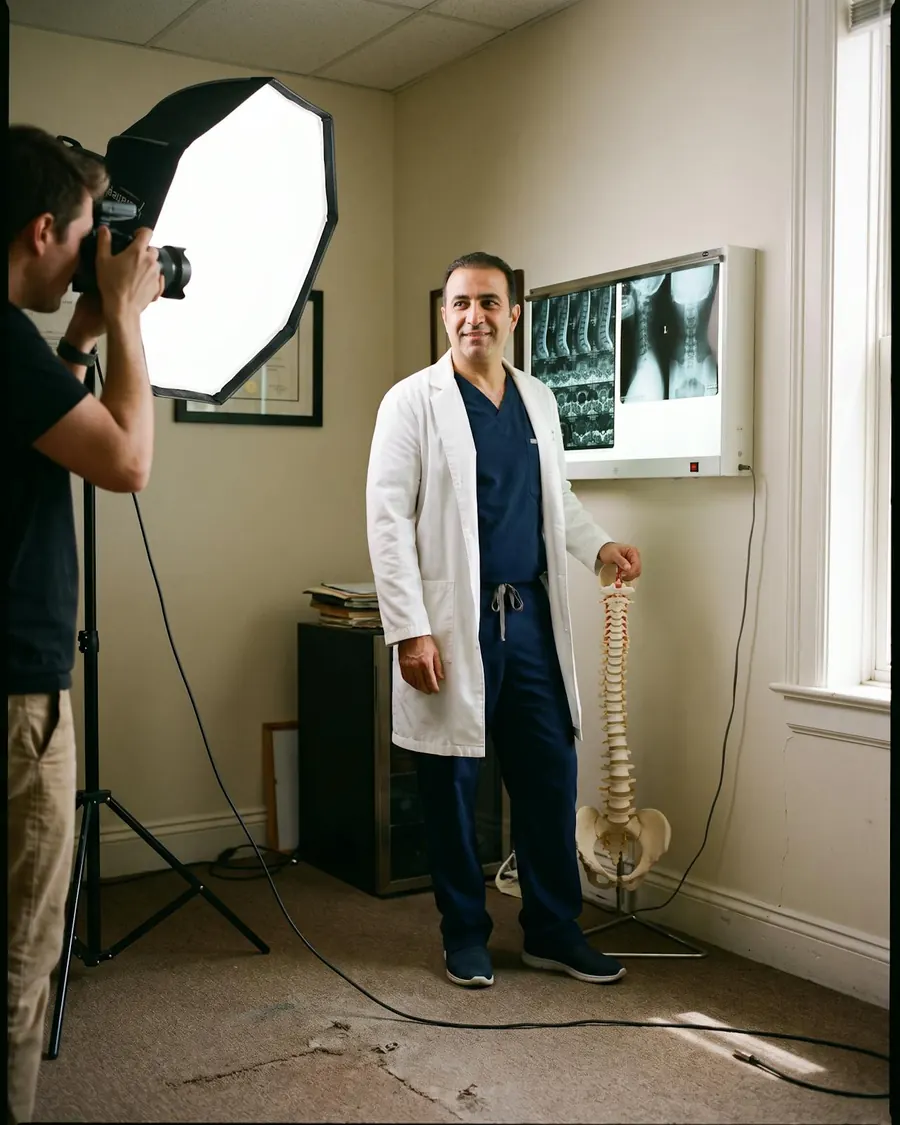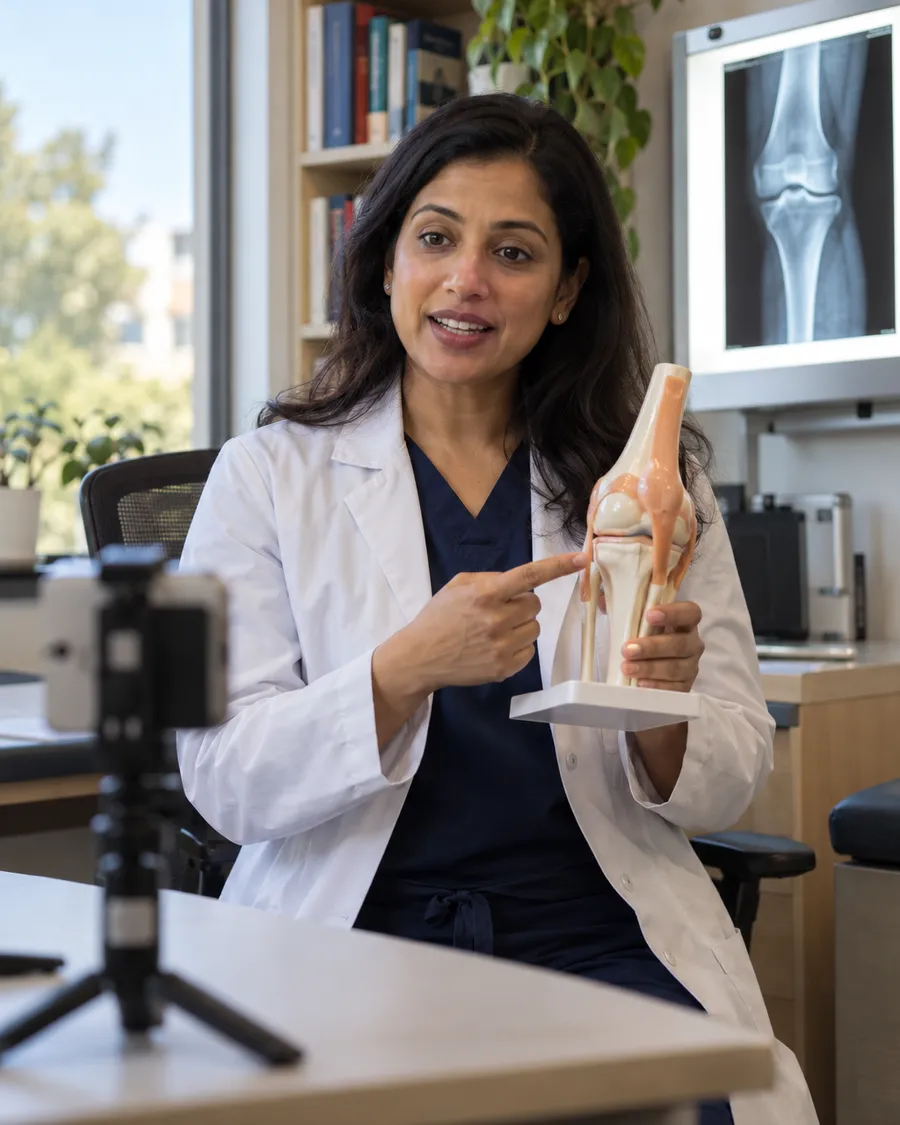

A patient with knee pain rarely picks a surgeon at random. They ask friends, search Google, read reviews, watch a video or two, and more and more often they ask ChatGPT or Google’s AI answer which surgeon to see. By the time they call your clinic, most of the decision is already made.
A personal brand is simply what patients find, and what they feel, when they look you up. You already have one. The question is whether it reflects your real skill and experience, or whether a less experienced surgeon down the road looks more convincing online.
This guide covers what we see working for orthopedic surgeons in private practice and in hospitals, in India and abroad.
Why orthopedics is different
Orthopedic decisions are high stakes and usually not emergencies. A patient considering a knee replacement, ACL reconstruction or spine surgery has weeks to research. They compare surgeons on four things:
- Experience with their exact problem. “Knee replacement surgeon” is not the same as “sports injury specialist” to a patient.
- Outcomes they can relate to. Stories of patients like them walking, climbing stairs or returning to sport.
- Trust signals. Training, hospital affiliation, reviews and how you explain things.
- Practical fit. Location, availability, cost guidance, and whether they can reach you easily.
A strong personal brand answers all four before the patient ever calls.
Step 1: Fix the foundations patients check first
Start with the places patients look before anything else:
- Google Business Profile. Your name, specialty, clinic address, hours and phone must be correct and identical everywhere. Choose the most specific category available, add real photos of you and your clinic, and list the procedures you perform as services.
- Hospital and directory profiles. Patients often land on your hospital’s doctor page or a directory listing first. Make sure your photo, qualifications and focus areas match your own website.
- One clear focus line. For example, “Knee and hip replacement surgeon in Hyderabad” or “Sports injury and arthroscopy surgeon in Dallas.” Use the same line on every profile.
Step 2: Build a website that answers patient questions
Your website is the one place you control completely. For orthopedic surgeons it should include:
- A clear page for each major procedure you perform, written in plain language: who it helps, what recovery looks like, and when surgery is not the right choice.
- Your training, fellowship and hospital affiliations, with a real photo.
- Honest guidance on what to expect at the first consultation.
- An easy way to book: phone, WhatsApp or an online form that works well on a phone.
Write for the patient, not for other surgeons. “Will I be able to climb stairs after a knee replacement?” is a better heading than “Post-operative functional outcomes.”
Step 3: Earn reviews the right way
Reviews are one of the strongest signals for both patients and Google. Ask every satisfied patient, personally, at the right moment, usually at a follow-up visit when they are feeling the improvement. Make it easy with a short link or QR code.
Never offer incentives for reviews, never write them yourself, and never filter who gets asked based on how happy they seem. Reply to reviews professionally, including critical ones, without sharing any medical details.
Step 4: Use video to show how you think
Short educational videos let patients see how you explain things before they meet you. Good starting topics for orthopedics:
- “Do I need surgery for my knee pain?”
- “What really happens on the day of a knee replacement”
- “How long before I can drive after ACL surgery?”
- “Three exercises to start after a hip replacement” (with a clear note to follow their own surgeon’s advice)
Keep videos short, record in good light, and speak as you would to a patient in your clinic. Consistency matters more than production quality.
Step 5: Show up in AI search
Patients increasingly ask AI tools questions like “Who is the best knee replacement surgeon near me?” These tools draw on what they can find and trust about you: your website, Google profile, reviews, directory listings and articles that mention you.
The same foundations above help here. Clear procedure pages, consistent details across the web, genuine reviews and being mentioned on reputable sites all make it more likely that AI tools describe you accurately. You can check where you stand today with our free AI Visibility Check.
Step 6: Share real outcomes, carefully
Patient stories are powerful, but healthcare advertising rules apply. In India, the National Medical Commission’s rules govern how doctors may promote themselves. In the US, patient privacy law (HIPAA) and state medical board rules apply. In the UK, the GMC’s guidance applies. In every case:
- Get written consent before sharing any patient story, photo or video.
- Avoid guarantees or claims you cannot support.
- Keep the focus on education, not hype.
If you are unsure, check with your medical council or a healthcare lawyer before publishing.
What results look like
Personal branding is a long game, but it compounds. For one orthopedic surgeon we worked with in India, building his online presence over about two years changed how patients found him. The milestones are in the Dr. Arun Dev case study. For a US orthopedic practice that needed faster results, a focused Google Ads campaign raised tracked calls from around 10 a month to around 76 in the first 30 days (case study). Paid ads bring patients now; your personal brand makes every channel work better over time.
A simple 90-day plan
| Weeks | Focus |
|---|---|
| 1 to 2 | Correct your Google profile, hospital page and directory listings; agree on your focus line |
| 3 to 6 | Website procedure pages and a better booking flow |
| 4 to 12 | A steady review routine; one or two short videos a week |
| 8 to 12 | Check how AI tools describe you, and fill the gaps |
Where to start
If you would like a second opinion on how patients see you online today, book a free strategy call or run the free AI Visibility Check. We work only with healthcare, and our doctor branding service is built for surgeons who want their online presence to reflect their real expertise.
Keep reading
Related insights.
-
12 doctor branding tips to succeed in medical practice
In today’s competitive healthcare landscape, building trust with patients is crucial for doctors. As medical practitioners, you not only need to provide quality...
-
How to choose a healthcare marketing agency: 12 questions to ask
Most doctors and hospital leaders have a story about a marketing agency that promised a flood of patients and delivered a pile of reports instead. Healthcare...
-
How healthcare organizations recover from a negative brand image
In today’s competitive healthcare industry dealing Healthcare Organizations with Negative Brand Image is a night mare. Being a business owner maintaining a positive...