
Every year brings a list of predictions. Most of them are about tools. The trends that matter for doctors, clinics and hospitals are about patients: how they search, who they trust and how quickly they expect an answer.
These are the nine shifts we see shaping healthcare marketing in 2027, with what each one means for your practice. None of them requires a big budget. All of them reward practices that start early.
1. Patients ask AI before they ask Google
More patients now type a full question into ChatGPT, Gemini or Google’s AI answers: “Who is a good knee specialist near me?” The assistant replies with an answer, often naming two or three practices, instead of a list of links.
What to do: make your name, specialties, locations and services identical everywhere online, publish clear answers to the questions patients ask, and keep earning genuine reviews. Our guide on how doctors get recommended by AI explains the steps, and our AI SEO service puts them into practice.
2. Short, doctor-led video becomes the norm
Patients want to see and hear the doctor before they book. Short videos that answer one question each, filmed simply on a phone, now build more trust than polished advertising.
What to do: list the ten questions patients ask most, and answer one per video in under a minute. Use them on your website, Google profile, YouTube and Instagram. Our video content work is built around exactly this.
3. Healthcare social media becomes education, not promotion
The healthcare social media trend that keeps growing is education: explainers, myths and facts, recovery tips and behind-the-scenes looks at the team. Promotional posts and discount offers keep losing attention, and in many countries they also run into advertising rules.
What to do: plan content around the treatments you want to grow, keep every claim accurate, and get written consent before showing any patient. See our social media marketing service.
4. The doctor’s personal brand matters as much as the clinic’s
Patients increasingly choose a person, not a building. They search a surgeon’s name, read their profile and watch their videos before booking.
What to do: give every doctor a complete, consistent profile on your website, Google and the directories that matter, with training, experience and areas of focus. Our doctor branding service covers this.
5. Reviews carry more weight than ever
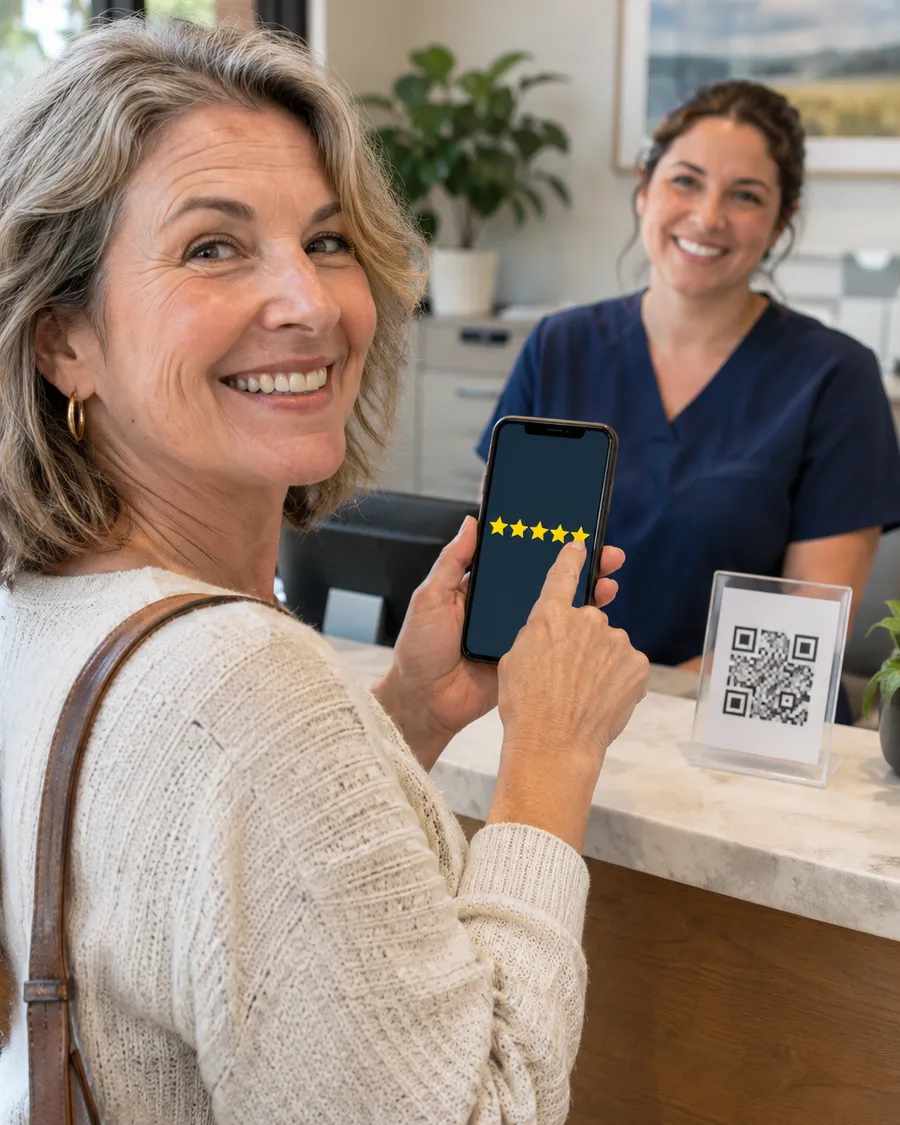
Reviews now influence both patients and the AI assistants that summarize what people say about you. A steady flow of recent, genuine reviews, with thoughtful replies, is one of the strongest signals a practice can build.
What to do: ask every patient the same way, at the right moment, and reply without sharing patient details. Our guide on how to get more Google reviews shows the compliant way.
6. Local search stays the front door
For most practices, the map results are still where new patients start. Google Business Profiles with accurate services, recent photos and regular updates keep winning “near me” searches.
What to do: treat your Google profile as a second website: list every treatment as a service, post updates regularly and answer questions. See our local SEO service.
7. Privacy-safe tracking replaces “track everything”
Regulators in several countries have tightened the rules on what healthcare websites may share with advertising platforms. In the US, HHS has warned healthcare providers about tracking technologies that can expose patient information.
What to do: review which tracking tools run on your website, especially on appointment and condition pages, remove anything that could share patient information, and measure results through booked appointments rather than detailed user tracking.
8. Speed to reply decides who gets the patient
Patients contact several practices at once, by phone, form and messaging apps. The practice that replies first, clearly and kindly, usually books the appointment.
What to do: set a goal to answer web inquiries within an hour during working hours, offer messaging where patients prefer it, and track how many inquiries become appointments. Our patient lead generation work starts here.
9. Booked appointments become the only number that matters
Clicks and followers are easy to count and easy to misread. Practices are moving to one simple measure: how many new patients each channel brings, and what each one costs.
What to do: track calls, forms and messages by source, then booked and attended appointments. Our guide to building a medical practice marketing plan shows how to set this up.
How to act on these trends
You do not need all nine at once. A practical order for most practices:
- Fix your Google profile, reviews and website foundations (trends 5 and 6).
- Make your identity consistent everywhere and start answering patient questions (trends 1 and 4).
- Add short videos and educational social posts (trends 2 and 3).
- Review your tracking and your reply times (trends 7 and 8).
- Measure booked appointments by channel every month (trend 9).
For the full picture of how these pieces fit together, read our complete guide to medical marketing.
FAQs
What are the biggest healthcare marketing trends for 2027?
AI search answers, short doctor-led video, educational social media, doctors’ personal brands, reviews, local search, privacy-safe tracking, fast replies to inquiries and measuring booked appointments rather than clicks.
What are the main healthcare social media trends?
Education over promotion: short explainers, myths and facts, recovery tips and team stories, led by real doctors. Accurate claims and written patient consent matter more than ever.
How should a small practice prioritize these trends?
Start with the free foundations: your Google Business Profile, reviews and website. Then make your information consistent everywhere, add short videos, and measure booked appointments by source.
Is AI going to replace Google search for patients?
Not entirely, but more patients now start with an AI assistant, and Google itself shows AI answers above its results. Being clearly described and well reviewed across the web helps in both places.
Keep reading
Related insights.
-
Medical practice marketing: a simple plan that works
Most practices do some marketing. A website, a Google profile, the odd social post, maybe a few ads. What most of them do not have is a plan that connects those...
-
How to get more patients: 10 ways for medical practices
Most practices do not have a patient problem. They have a visibility problem, a follow-up problem, or both. Patients who need you are already searching, asking...
-
How to get more Google reviews for your medical practice
Most patients read reviews before they book. They look at your star rating, how many reviews you have, how recent they are, and how you reply when something goes...