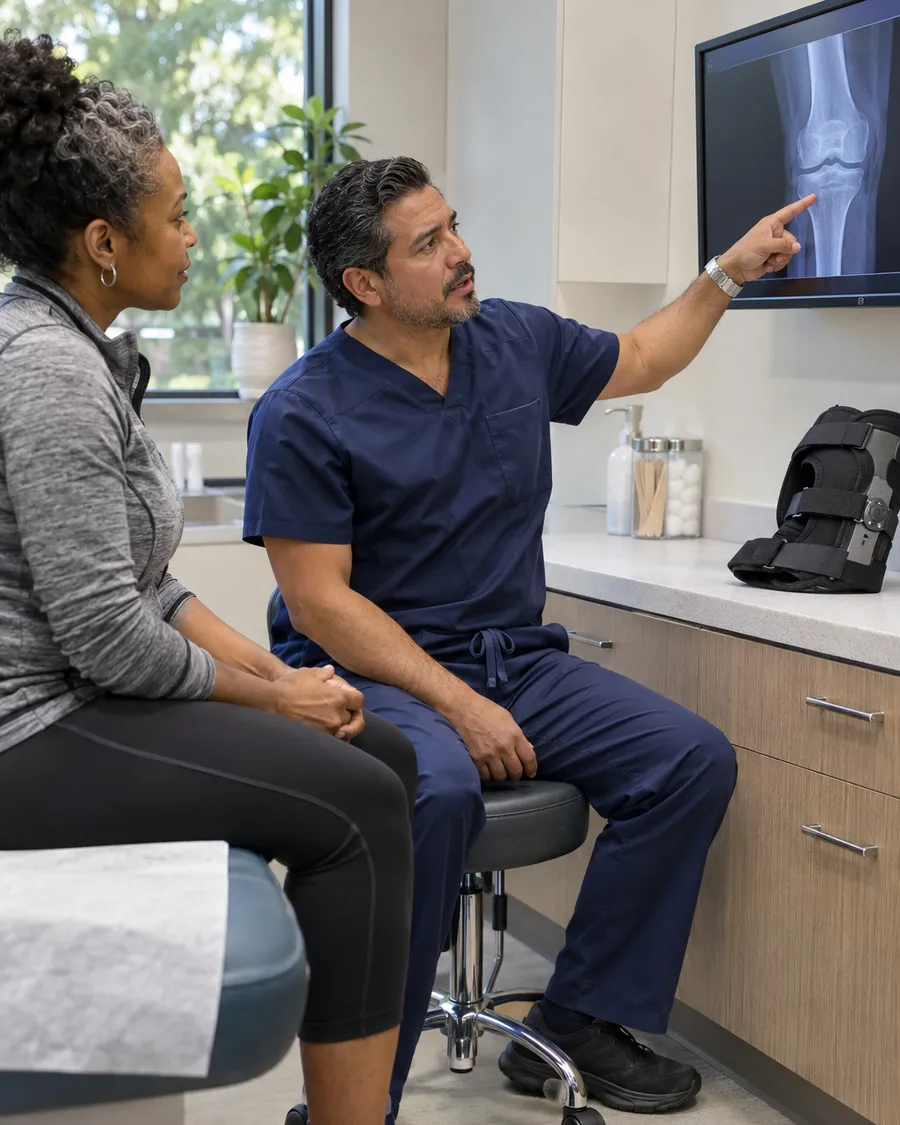

Orthopedic practices have a marketing problem most specialties do not: patients arrive with very different needs. A weekend runner with a torn meniscus, a retiree weighing a knee replacement and a worker with chronic back pain all search differently, decide differently and value different things. Marketing that treats them as one audience brings the wrong calls and wastes the front desk’s time.
These nine approaches are what we see working for orthopedic practices, from solo surgeons to multi-location groups.
1. Decide which patients you want more of
Start with the procedures and conditions that matter most to the practice, clinically and financially. Total joints, sports medicine, spine, hand and upper extremity and pain management each need their own message and often their own budget. Writing this down first keeps every later step focused.
2. Own your local search results
Most orthopedic searches are local: “knee surgeon near me”, “sports medicine doctor in Plano”, “hip replacement specialist Tampa”. The map results usually appear first.
- Keep a Google Business Profile for each location and each provider where appropriate, with accurate hours and phone numbers.
- Choose the most specific categories, such as “Orthopedic surgeon” and “Sports medicine clinic”.
- Add real photos of the practice, imaging suite and team.
- List the procedures you perform as services.
Google’s guidelines for representing your business explain what is allowed for practices with several providers and locations.
3. Build a page for every major procedure and condition
A single “Services” page cannot rank for “rotator cuff repair”, “ACL reconstruction” and “anterior hip replacement” at once. Each deserves its own page that answers what patients actually ask:
- Who is a good candidate, and when surgery is not the right choice
- What the procedure involves and how long recovery takes
- What insurance usually covers and how to book
These pages also give AI assistants clear, accurate information to draw on when patients ask them which surgeon to see.
4. Make reviews part of the routine
Orthopedic patients read reviews closely, especially for elective surgery. Ask every satisfied patient at the right moment, such as a follow-up visit when they are walking without pain, and make it easy with a text link or QR code. Reply to every review professionally, and never confirm that someone is a patient or mention their condition in a public reply, which matters under HIPAA. Google’s review content policy prohibits incentives and fake reviews.
5. Use Google Ads for high-intent procedures
Paid search works well for orthopedics because intent is clear. Focus campaigns on specific procedures and locations, send each ad to the matching procedure page rather than the home page, and track calls and form submissions, not just clicks.
In one US orthopedic practice we worked with, a focused Google Ads campaign raised tracked calls from around 10 a month to around 76 in the first 30 days (case study).
6. Strengthen physician referrals
Primary care physicians, physical therapists, chiropractors and urgent care centers send a large share of orthopedic patients. Make referring easy with a direct line or online form, send a short update after you see their patient, and visit the practices that refer most often.
7. Turn your surgeons into recognizable names
Patients increasingly choose a surgeon, not a practice. Short videos answering common questions, a strong provider bio page and consistent profiles across the web help each surgeon become the name patients look for. Our guide to personal branding for orthopedic surgeons covers this in detail.
8. Fix the steps between interest and appointment
Many practices lose patients after the marketing has already worked: calls go to voicemail, forms ask for too much, or the next available appointment is weeks away. Answer calls promptly, offer online booking or a quick callback, and follow up with every lead the same day.
9. Measure what matters
Track new patient appointments by source and by procedure, cost per new patient from each channel, and how many consultations turn into surgery. These numbers show which channels deserve more budget, far better than clicks or followers.
A simple 90-day plan
| Month | Focus |
|---|---|
| Month 1 | Google Business Profiles, review routine, decide priority procedures |
| Month 2 | Procedure pages for the top three priorities, booking and call handling |
| Month 3 | Focused Google Ads for one or two procedures, surgeon videos, referral outreach |
Where to start
If you run an orthopedic practice in the US, see how we work with surgeons and practices in the United States, or book a free strategy call and we will show you where you are losing patients today.
Keep reading
Related insights.
-
Patient footfall: what it means and how hospitals increase it
Ask any hospital owner in India how the month went and you will often hear one word: footfall. It is one of the simplest numbers in healthcare management, and one of...
-
Digital marketing for hospitals in India
Digital marketing has become an indispensable tool for businesses across various industries, including the healthcare sector. Hospitals in India are recognizing the...
-
9 effective hospital marketing strategies to gain more patients
Hospital Marketing need to be on top of the game when it comes to promoting it’s services in the extremely competitive healthcare environment of today. In addition to...